

When I coached Overwatch at a high level; I often received feedback from players and other coaches that my style of coaching was…uncomfortable. The main cause of this being that I was willing to dabble in the unconventional. Every game and every sport has metas; popular and standardized ways to approach the game. In some cases it can be as simple and unchanging as zone defense versus man on man, in others, like in League of Legends, it can change almost week by week. And no matter what game or sport you are playing, if you are outside the norm, you are heavily criticized and often ostracized. For this reason, I think it is interesting to dissect how stubborn mindsets can affect esports and cause issues such as the LS versus Caedrel drama happening in League of Legends right now.
“…if you are outside the norm, you are heavily criticized and often ostracized.“

Preface
When I started casting League, I was initially drawn to LS because I am someone that likes to challenge the status quo and try new ideas. This mindset can be both exciting and dangerous because you put yourself in a position of facing ridicule for the sake of innovation. You might be the first person to figure out the new overpowered build and define the next meta, or you can die on a hill for years, never to be proven right. This path is a double edged sword and in the case of LS and Caedrel, there are flawed arguments on both sides.


Putting the Scales in Scaling
Renekton is a champion that does a few things really well, but, outside of those things, is fairly one dimensional. LS has criticized the champion over the course of multiple years, claiming that it is too one dimensional, does not scale well into the late game, and needs too many resources in order to succeed. In the past, I’ve agreed with him on this particular point because it logically makes sense based on the champions numbers over the last two years. In the top leagues (LCS, LCK, LPL, LEC, LMS, MSI, and WORLDS) in season 9, according to GOL.gg, Renekton was picked 286 times with a 50.3% win rate. In season 10, he was picked an incredible 465 times with a 51.8% win rate. Overall, Renekton was not underperforming, but he wasn’t exactly overpowered either. So in a game with over 100 champions, I think it is fair to criticize a champion like Renekton for having clear weaknesses and counters that could potentially be exploited more often.
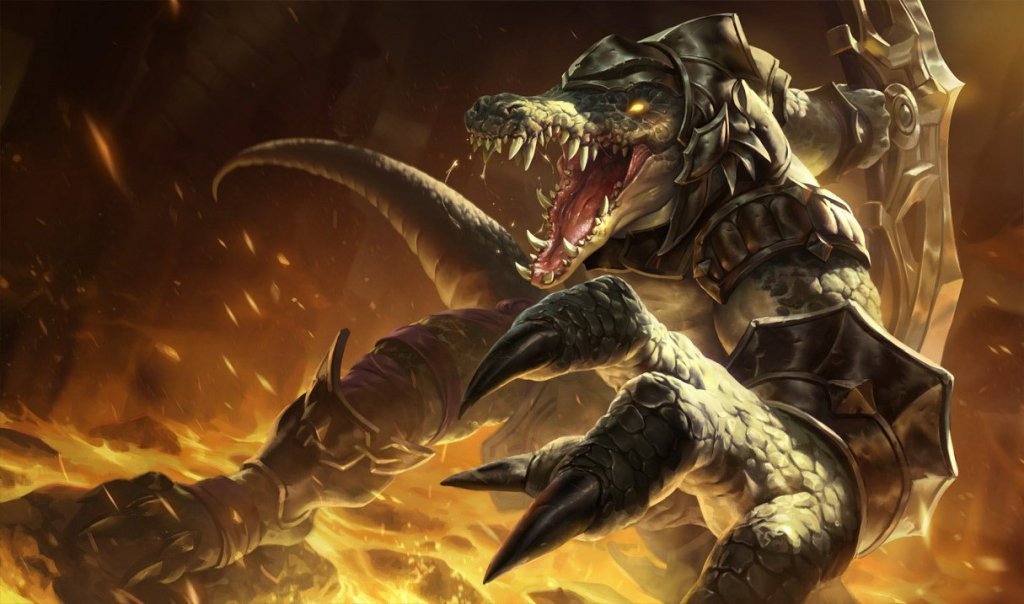

StrideBreaker
However, everything changed this year. With Riot Games making wide sweeping changes to items in League, Renekton found a revitalization as a champion. With mythics like Stridebreaker and Goredrinker offering Renekton better sustain and/or gap closing options, and Steraks’ gage bolstering survivability, Renekton has come into new power levels. With 201 picks at the highest level of play mid way through the season, Renekton has an incredible 82.8% presence and 58.2% win rate. Statistically, this champion is arguably stronger than ever this season thanks to new items reducing the punishability of his previous weaknesses.
So let’s step back for a second. For the last 2 years, LS has been fighting on this particular hill and has been arguably correct to do so. However, things have changed and so has the champions performance. In an ideal world, this should mean that the opinion of LS changes as well. If it doesn’t, then LS is at fault and should rightfully be called out on it. In this regard, Caedrel is within his right and within reason to call out a flawed mentality; especially if it is coming from someone as influential as LS.
Pro Players Don’t Know Everything
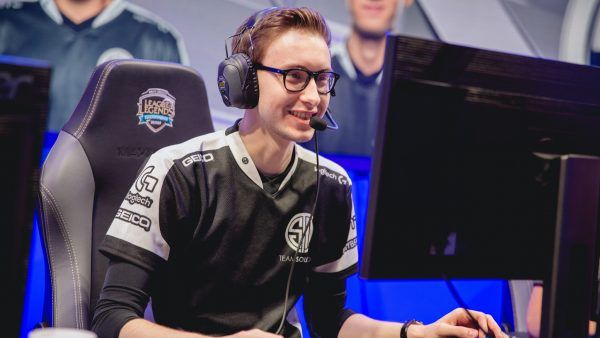
On the other side of the coin, the issue comes in how Caedrel approaches his argument. Saying “ I think I speak for many pros across the world here in saying that this champ has been one of the strongest tops over the last 2 years in pro play, suits almost every draft and has very little counter play in fights”, comes from a flawed mindset. The mindset is that pros don’t think it’s bad/ don’t understand why LS thinks it’s bad and the champ has solid performance/is getting picked quite a bit. This goes back to my initial point about meta. Just because something is chosen and/or done a certain way consistently does not always mean it is correct.
In football, it is statistically better to go for it on 4th down almost all the time instead of punting. This is a mathematically proven fact. Yet, this approach is adopted by no professional teams because it goes against everything the world knows about football. Things have been done a certain way for so long that people refuse to accept change even when it is proven to be better. The same can be said for League of Legends. Why do we rarely see marksmen in other lanes? Why do we ignore picking clear counters in pro play because the champion isn’t common? And why do we continue to pick bad champions in spite of statistics? Because that is how things have always been done.
Syndra is a champion that is widely considered a strong early mid laner. In past seasons this has been true. In fact, in season 10, Syndra was picked in pro play 386 times with a 54.1% win rate. Overall, fairly strong. However, this season, Syndra has been picked 187 times with a 38.5% win rate. Whereas Renekton got stronger with the item changes, Syndra got gutted. Yet, pro players still pick this champion despite the statistics saying she should not be meta. Pro players don’t always know what is best and, in my experience, they often live in an echo chamber where they think something is strong and other pros agree with them. This can foster a potentially dangerous standardization of play, the very thing LS has worked incredibly hard to combat.
Conclusion
When all is said and done, metas will always exist in some form or other. There is no clear right side to these issues, but there is a clear flaw in both sides. That flaw is stubbornness and being unwilling to change. Metas change, games change, and people change, a person’s mindset has to change as well. The innovator will have as many flawed ideas as they have great ones, and the meta slave will play both optimally and sub-optimally. But if the culture doesn’t become more open to change, new ideas, and learn to accept reality, growth in the scene will always be stunted.
 Vali Creates Blog