
 Overwatch is a rising star in esports. With owners, fans, and Blizzard Co. funneling millions upon millions of dollars into it yearly. Well, more accurately, funneling millions of dollars into the Overwatch League. Overwatch Contenders, while getting some funding, is miles behind the amount of exposure and financial support of Blizzard’s newest flagship league. Sadly, the lack of support for Overwatch’s semi-professional is systematic, becoming more and more cancerous the lower the tier.
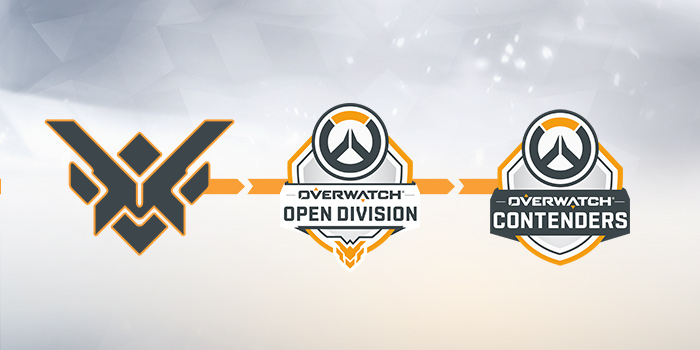 Building the Path to Pro
Traditional sports succeed because they have a ladder a player can climb to reach the pros. A system that begins in childhood. Let’s take a look at Soccer, a world renowned sport with an academy system designed to foster top tier talent. Children play on club teams, school teams, and if they are talented enough, academy teams. These academies provide professional level coaching, top tier competition, and fantastic scouting opportunities for young kids as they grow into adulthood. In contrast, Baseball runs its path through the school system. From club to High School to College to being drafted to the teams semi-pro team, players are given both a path to pro and an opportunity for an education. Traditional sports are built to provide a path for players to go pro, Overwatch is not.
Despite their twitter tags claim to being the path to pro, Overwatch Contenders is a facsimile of a semi-pro scene. In order to get onto an Open Division team a player must be within the top 100 to top 150 on the competitive ladder in their region. According to Blizzard, less than 1% of players reach Grand master rank. Meaning worldwide, somewhere between 200,000 and 400,000 players achieve the rank of GM. Significantly less of these players make it to top 500 let alone top 100 in their respective regions. If that few players can reach a place where they have a slim chance of going semi-pro, imagine how incredibly minuscule the odds of a player achieving the rank of pro are.
Overwatch’s path does not go through Collegiate esports; instead it funnels players through an impossibly complex system with improbable odds. Beyond that Blizzard provide no advertising, no incentive, and no resources to the players involved in these systems.
 Advertising
Have you ever heard of the Overwatch Open Division? If the answers is yes and more than once, you are most likely at least somewhat involved with Overwatch’s tier 3 scene. However, the majority of players have never heard of this division outside of the promotion at its creation. Personally, until I became friends with two tier 3 coaches/managers I had no concept of the scene, its competition, or its players. In fact, the best advertising Open Division has received is when the popular streamer Felix ‘xQc’ Lengyel joined a team in the tier 3 scene. Otherwise, Overwatch’s Open Division has been given zero air time, zero advertisements, and overall zero resources.
However, while the tier 3 scene feels all but abandoned by Blizzard, it is not the only part of the Path to Pro that has been neglected by its governing body. Overwatch Contenders, the semi-pro division with contracted players, pro organization Academy teams, and legitimate broadcasts with quality casters is still struggling to find its feet. Granted, there is some advertising for Contenders, as seen by ads on Blizzard’s Battle Net Launch Client home page. Yet, Contenders still only averages 15 thousand viewers per broadcast, a mere fraction of the 100 thousand average set by the Overwatch League. Beyond that, advertising is meaningless when the scheduling and time zones make it incredibly difficult to watch consistently. North American Contenders takes place on Tuesday and Thursday starting at 7 pm Est, Korean Contenders is shown Sunday, Wednesday, and Thursday at 1 am Est, and European Contenders airs Saturday and Sunday at 12 pm Est.
Now, I cannot speak for anyone except for myself, but I personally have no desire to stay up till 1 am in order to watch Contenders Korea. Likewise, I in the middle of my school day, or what is many people’s prime work hours, will not be watching European Contenders at Noon. So naturally I would watch the Contender’s for my region, right? Wrong. When Overwatch League and Contenders are on at competing times, I am, without a doubt, watching the very top tier competition of the Overwatch League. The only problem with the idea of picking from broadcasts with conflicting times is that I had no idea when North American Contenders even happened before sitting down to write this blog post. In fact, the most advertising I’ve seen for Contenders has been Australian Contenders on Sunday and Monday at 9 pm Est. Even then, I rarely have any incentive to watch a broadcast that feels like a watered down Overwatch League.
 Resources: Players and Money; or a Lack Thereof
Contenders has a quality broadcast feed with decent Casters. But it lacks resources and funding. With a prize pool of $185,040( in the major regions) split between the teams based on placement as well as money for match wins; Contenders prize pool is barely more than one stage championship of the Overwatch League. The New York Excelsior made $450,000 by winning 2 stage championships, coming in second in 2 stage championships, and winning their division. Beyond that, players in the OWL are guaranteed $50,000 at a minimum for their contracts, there are no such stipulations for Contenders players. Yet, beyond the money, I have seen more players go from Overwatch League to Contenders than vice versa. Players such as Tizi, Rascal, and WooHyal, all dropped to tier 2 from tier 1. But a lack of prize pool, guaranteed funds in contracts, and players being funneled into the pro scene is not the worst of Blizzard’s negligence and apathy towards the semi-pro scene.
This year, Blizzard has decided to tack on the finals of each major Contenders region to its Overwatch World Cup group stages. Last season, the finals for North American and European Contenders was held as a lan event in Poland. Simply put, it flopped. A lack of advertising meant a lack of viewership which led to a lack of potential viewer care/ connection for the event. So Blizzard decided to pull funding. Instead of changing the schedule, adding additional resources to advertisement, or funding events to build the Contenders scene’s profile, Blizzard decided to link it with the OWWC, an already disappointing event (see last blog post), and demonstrated just how meaningless the lower tiers are in Blizzard’s eyes.
If Blizzard’s treatment of Contenders seems bad, their treatment of Open Division is even worse. With a prize pool built only on Blizzard Balance; Open Division winners/ participants make no money to fund their dreams of going pro. The only things those that make it to Contenders Trials have is the slim hope of reaching Contenders where they will get a contract and a salary, even if it is most likely not a viable living wage. In comparison to Open Division, Contenders seems top quality with actual broadcasts, analysis and lan finals. In reality, Contenders is a facade designed to give players hope in a system with unrealistic chances. What is worse is that with the creation of Overwatch’s Path to Pro, tournaments like Apex, the Atlantic Showdown, and the Overwatch Weekly Rumble have completely dissipated in the face of becoming obsolete.
 Path to Pro: Change or Bust?
I’ll be honest, I do not know why Blizzard seems to care so little for their semi-pro scene. However, I do believe there is a solution. In fact, I believe there are two. One of which I will discuss in more detail for my next post. That solution is to maintain the Contenders system but expand it into 3 tiers, like semi-pro baseball. From there, Blizzard could funnel young players through college esports and then said players could be drafted to an organization’s low tier team and work their way up. Older or younger players could also be picked up by teams directly from the ladder or form their own teams that make t to Division 3 of Contenders by playing in lower tier tournaments. I will expand on this concept in my Thursday post.
The second solution is to change Contenders. To adjust the schedule, promote the players and their streams, advertise broadcasts, and overall provide more funding and attention to the scene. Likewise, the prize pool for Open Division needs to change, and their games must be broadcast so players whose teams don’t make it to Contenders can be more easily scouted by Contenders teams. Beyond that, broadcasting the games would open up more jobs for analysts and casters attempting to break into the scene. I personally believe this is the lesser of the two options, but I do know that something needs to change. Blizzard can only neglect the bottom tiers for so long before the whole system crumbles.
~Ashley.
 Vali Creates Blog